Retaining walls function gently up until they helical pile foundations don't. When pressure constructs behind a wall surface, the indications hardly seem away from nowhere. You view hairline cracks extend throughout the face, weep openings operate a lot longer after hurricanes, or even the top of the wall stoops simply good enough to catch the eye. Helical tieback anchors are one of the best trusted methods to regain capacity and stop motion without fixing the whole construct. Put in properly, they supply quantifiable protection as well as prompt lots transfer. Mounted poorly, they add little bit of worth and also often create circumstances worse.
This resource distills best practices from the area. It covers what issues on design, boring slants, twist correlation, grout, hot-dip galvanizing, bracketry, screening, and also paperwork. It likewise frames when helical tiebacks are the right resource and also when micropiles, protection piles, or even various other approaches a lot better accommodate the complication. The situation leans toward commercial foundation stabilization as well as deep foundation repair where lots and also responsibilities are greater, however the principles put on metropolitan as well as heavy public work as well.
Where helical tieback anchors bring in sense
Helical tieback anchors stand out when the maintained dirt comes from the front face of the wall and also you may drill entries on a measured network. They match soldier stack wall surfaces, piece stack wall surfaces, cast-in-place concrete wall structures, and also certain masonry wall surfaces that possess sufficient honesty to take loads with a grain or faceplate. Common embedment sizes range coming from 15 to 45 feets depending on ground health conditions and also target abilities. In channel dense sands and rigorous clays, a helical tieback may provide working loads of twenty to 80 kips with predictable efficiency, verified by installment torque as well as verification testing.
They are not a cure-all. If the wall surface is gravely displaced or the backfill is saturated as well as badly drained pipes, tieback anchors will certainly fight a shedding battle versus hydrostatic stress. In extensive clay-based regions along with periodic dampness swings, you may still need to have water drainage improvements, an alleviation well, or controlled backfill. In historical stonework along with friable mortar joints, anchorage typically calls for circulated walers and careful bunch discussing to stay clear of neighborhood crushing.
In short, helical tiebacks restrict motion through interacting qualified dirt beyond the active wedge. They are actually most reliable when coupled with drainage, appropriate wall structure dealing with, and also a considerate load road from support head to design. On heavily crammed sites or where access is restricted, micropiles or bored resistance piles may pioneer, particularly for upright bunch pathways and also underpinning instead of side restraint.
The ground investigation that saves migraines later
Everything really good concerning commercial helical tieback anchor installation begins with the dirt profile page. An easy borings prepare that overlooks a slim layer of loosened stuffing or organics can kitchen sink ability prophecies. I wish at least two borings along each one hundred feet of wall surface, made up for slightly so we are certainly not ignorant variability. If the wall surface encounters a reduce with blended fill, incorporate borings. If groundwater varies seasonally, take famous data or even set brief piezometers.
Pay attention to:
- Stratigraphy continuity and also thickness of seasoned layers relative to expected coil elevations. Shear durability criteria. For coarse-grained soils, SPT N-values as well as relative quality; for logical dirts, undrained shear stamina from laboratory screening or even wallet penetrometer adjusted to the site. Groundwater depth as well as in season array, whether artesian disorders exist, as well as the potential for piping. Fill versus native. Old urban occupies may hold block, lumber, as well as spaces. They are alright for the wall structure skin, not excellent for anchor bearing.
A good geotechnical file ought to provide support capability relationships. If not, use supplier torque-to-capacity partnerships as a beginning aspect, then validate along with verification screening. Conventional concept initially put in is actually rarely regretted.
Helix setup, steel selection, and corrosion
The helix top is actually your business end of a helical tieback. Pick layer sizes to match ground quality as well as aim at abilities, normally piling two to four plates on the lead. A popular configuration for combined soils might be 10-12-14 inch coils spaced 3 opportunities their size. Always keep layers far enough apart to prevent soil disorder overlap. For lengthy tiebacks along with several layers, that space concerns greater than people think, particularly in soft clays where remolding decreases stamina around carefully spaced plates.
Shaft choice depends upon each ability and installment torque. Strong straight shafts pass through well through impediments and also heavy soils as well as supply sturdy torque transfer. Round unfilled areas supply better bending hardness as well as corrosion allotment for long-lasting company. Many industrial work utilize 1.5 to 1.75 in square shafts or even 2.875 to 3.5 in round rays. Know your setup equipment's twist restriction and also match it to bum rap and also aim at load so you are not delaying gears or even under-driving anchors.
Corrosion is not an add-on subject. For long life span, define hot-dip galvanizing or even a combined device of priming plus sacrificial density. In hostile dirts with reduced resistivity or roaming currents, think about epoxy layers or even, in uncommon high-risk cases, cathodic security. File ground resistivity testing; guesses at corrosivity are bad practice for 50-year walls.
Access, holding, and exactly how real websites modify plans
Designs go through tidy abstractly. In the field, guardrails, utilities, traffic control, and adjoining residential property lines make complex every little thing. Beginning with a setting up planning that responds to: where the rig will definitely station, where twist surveillance equipment as well as hydraulic power bundles will sit, how spoils will be included, as well as exactly how fragments as well as drilling liquids will be deflected pedestrian options. On city pathways, also a small spill causes issues. Establish restriction tarps and also vac any type of slurries immediately.
If the wall structure does not have a clear skin due to landscape design or even veneer stone, strategy discerning leveling. Retain the subdrain's functionality throughout work. Accumulate core examples on the face to confirm wall structure thickness as well as encouragement. Rebar locators help avoid traversing pubs throughout coring, however old wall structures do not consistently match as-builts. I like to validate a minimum of 2 admittance sites prior to devoting the workers schedule.
Entry slant and anchor geometry
Helical tieback anchors for maintaining wall structures commonly set up at struggling slants of 10 to twenty degrees below straight to reach the passive zone without losing into deeper unstable levels. The target is actually to begin at the wall structure skin, go through the energetic block, and also bear in capable component beyond the academic failing plane. In rough backfill behind soldier stack lagging, a slightly steeper slant can easily assist avoid disrupted regions as well as any electricals. Having said that, steeper slants increase the vertical element of the support pressure, which might elevate the wall otherwise appropriately dispersed through a wale.
Keep the admittance elevation higher enough to converge your grain or even faceplate comfortably. On tall wall structures, think about pair of or even even more elevation rows to distribute tons and also limit flexing in the wall structure face. If the wall is adaptable, a top row commonly stabilizes turning much better than including extra supports to a single reduced row.
Pre-drilling as well as impediment handling
Working in outdated city stuffing promises obstacles. Lumber, brick, and also occasional cement slabs show up unheralded. The best teams lug a small-diameter fly auger and also a core gun barrel for the face. Pre-drilling a fly hole through the face and also the initial handful of feets of backfill helps steer the anchor as well as minimizes spalling. If you reached a rejection before getting to concept deepness, carry out certainly not require it. Wiggle out, shift flat or slightly change angle, and attempt once again. Tape the obstacle as well as carry on. One or two movings every one hundred shoes of wall surface prevails. Moreover, as well as you may need to have an alternate body like a drilled micropile anchor.
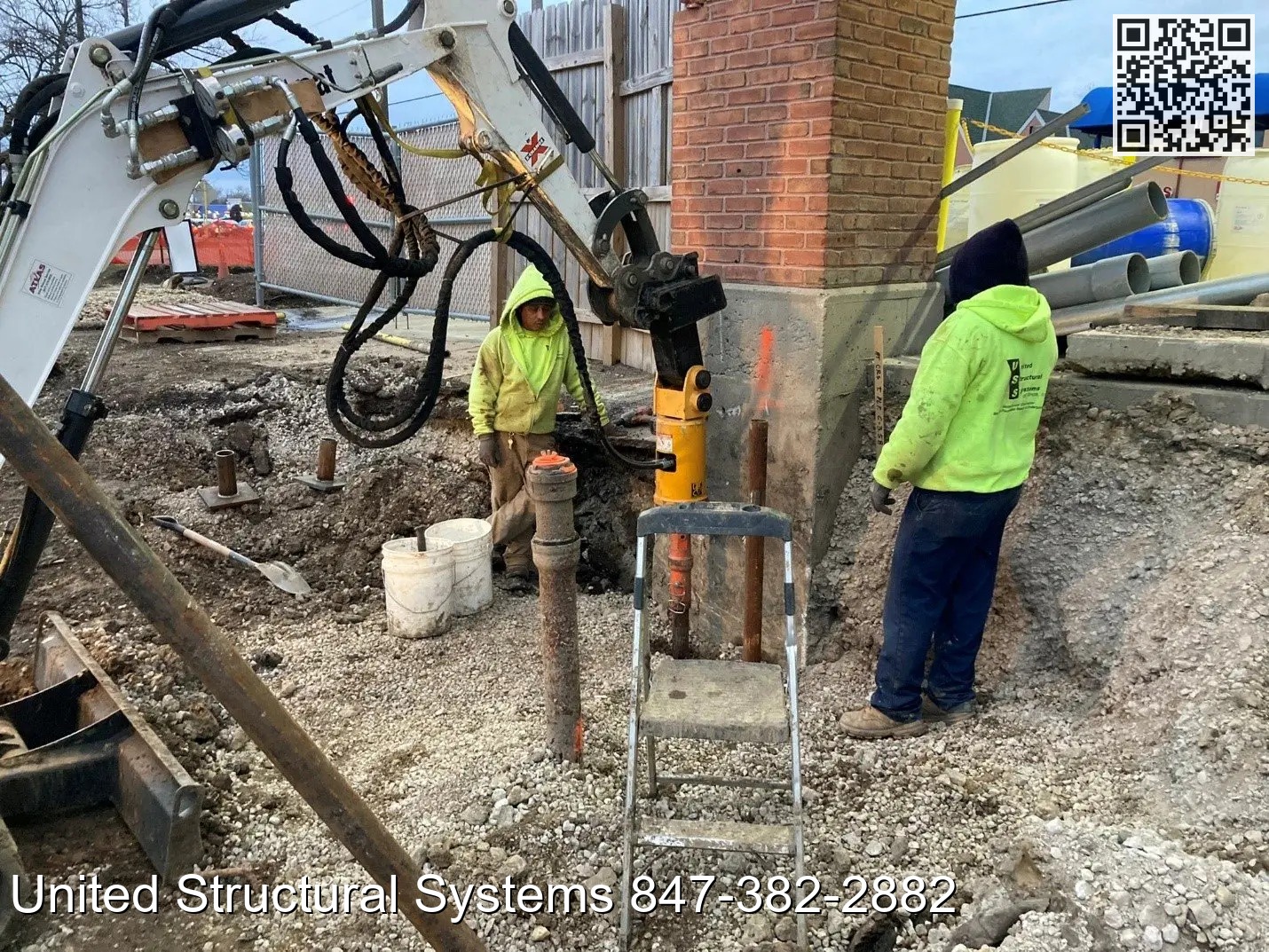
Pre-drilling by means of cobbles and dense gravel may be a double-edged sword. It reduces installation yet may reduce confinement and also dirt capacity if overdone. Keep pre-drill dimensions as little as sensible and simply through the problematic zone, not around anticipated coil bearing layers.
Torque tracking and ability correlation
Torque is the heart beat of helical installation. Field crews should enjoy an adjusted torque clue tied to the disk mind. A lot of manufacturers publish torque-to-capacity ratios, frequently in the range of 8 to 12 foot-pounds per kip for square shaft bodies and also rather unique for rounded shafts. Neighborhood dirts change those varieties. Alleviate posted worths as advice, then evidence exam sufficient supports to refine the project-specific correlation.
I like to establish a minimal embedment length and a minimal termination twist. Not either-or. Ending simply on twist can leave behind a short support with threats of lots losing as dirts creep. Terminating merely on deepness can easily leave behind an underperforming support in soft coatings. Call for each. As well as if the twist surges quickly, time out to view if you attacked an isolated thick lens. If twist loses constantly over numerous feet, you are most likely in a weak layer. Readjust the layout on the fly with developer commendation rather than hopeful thinking.
Grouting, encapsulation, and groundwater
Not every helical tieback is actually grouted. In many lumpy dirts, ungrouted helical anchors do properly and also prevent clutter. In delicate clay-baseds or even extremely annoyed fills, cement can easily stabilize the annulus as well as boost rigidity near the wall surface face. Utilize a controlled reduced hemorrhage mix. If groundwater is active, stress grout from all-time low up making use of tremie strategies to stay away from voids. I prefer to grout merely the top portion near the face where tons transfer right into the wall benefits from boosted tightness, unless the style exclusively requires full-length encapsulation to enhance oxidation protection and also capacity.
If the website possesses circulating groundwater, put together a septic tank as well as pump to always keep the work region completely dry. Wet faces complicate epoxy or even sealant building at the plate. Quick-setting nonshrink grout assists chair the bearing plate strict to the wall even in moist conditions.
Waler systems, faceplates, as well as tons transfer
A helical tieback is actually just like its own link to the wall surface. For soldier heap along with hardwood or concrete lagging, a constant steel grain circulates support tons and also maintains the lagging from pulverizing locally. For cast-in-place or even precast designing a helical pile foundation concrete, a steel bearing plate sometimes is sufficient, yet even then I like to prolong a brief grain to record neighboring anchors and restriction boxing danger. Stonework wall structures often need a spreader platter along with anchors spaced closer to always keep compressive stresses listed below allowable market values. On famous block, compressive capability could be shockingly reduced. Field testing along with a standard jack offers actual amounts and protects against surprises.
Anchor minds ought to be accessible for potential assessment. Welds and also bolts require to be secured, often by priming and after that a strong covering after setup. If the wall structure will certainly be laid to rest again, wrap the head in a preventive membrane layer just before backfilling.
Proof testing as well as performance verification
Proof screening is certainly not a procedure. It is the only means to turn torque connection and also summations right into confirmed ability. Regular protocols require filling each examination anchor incrementally to 1.25 to 1.5 times the concept tons and also holding at each step, seeing creep over a set timeframe. Approval could restrict total activity at optimal exam load and also creep during the course of the last pursue strict thresholds, for example lower than 0.04 inches in 10 minutes, depending on the regulating standard.
Test sufficient supports to catch irregularity. On a 200 feet wall surface along with uniform soils, testing the first pair of anchors in each row and also 5 to 10 per-cent afterwards prevails. In changeable filler or if twist analyses reveal broad scatter, enhance the price. Document every thing: torque at each feet of embedment, final twist, tons at each action, variation analyses, as well as hold opportunities. A well-maintained testing record pacifies issues months later.
Drainage and also eliminating stress behind the wall
Even the best anchor can certainly not out-muscle water. If the wall structure does not have useful drainage, add it. Unobstructed or even change obstructed weep gaps. Put in a perforated subdrain wrapped in filter fabric at the bottom and daytime it to a suitable channel. Use free-draining backfill for any switched out parts. On commercial foundation repair projects where the wall surface abuts a building, association site certifying and also roofing system water drainage into the style to keep drainage far from the wall. Hydrostatic relief takes a shocking quantity of tons off tiebacks throughout hurricane cycles.
Safety, powers, and also permissions
Every commercial helical tieback anchor installation rests inside a web of licenses, energy marks, as well as sometimes surrounding building easements. Contact electrical situates early, after that validate along with ground penetrating radar when options pass near vital lines. I have seen fuel solution collections run diagonally throughout backfill when they were actually intended to become directly. That surprise ruins a day. If supports need to extend under a neighboring parcel, get a legal tieback easement as well as file it. Future digging through other people can damage anchors otherwise.
On internet site, set firm operations for lockout of tools, above defense near energetic roads, and appropriate bracing of the face while coring. Keeping wall surfaces that are currently relocating can easily change suddenly when passed through, particularly if filled. Use temporary supporting if the architectural designer highly recommends it.
Coordination with various other deep groundwork methods
Helical tiebacks reside in the exact same toolbox as micropiles, helical piles, and protection piles. Each device handles a different concern:
- Micropiles and also micropile installation take care of higher axial tons in minimal gain access to places as well as operate well for deriving when lots must transfer to much deeper strata. They are punched, bolstered, and also grouted, along with predictable functionality in cobbles and also rocks where coils struggle. Helical heaps are actually superb for compression and also pressure loads on brand new or retrofit groundworks, specifically where vibration has to be very little. commercial helical pile installation may be quicker than drilled bodies in even soils. Resistance stacks drive by gas hoisting against the building. commercial resistance pile installation helps when vibration should be limited and above access is actually constricted, though they rely upon accomplishing a prepared under the existing structure. Tieback anchors, particularly helical tieback anchors, handle lateral lots on preserving devices. commercial helical tieback anchor installation makes sense when wall surface faces come as well as dirts permit torque-driven embedment.
On tasks with each lateral as well as vertical demands, we often combine units. As an example, our company support a leaning wall structure with tiebacks at that point found the footing with micropiles to quit settlement deal. For structural foundation repair on older structures along with mixed issues, layered services are usual. Pick the most basic system that fulfills the bunch, dirt, as well as accessibility constraints.
Practical sequencing that always keeps workers productive
Nothing drags a task like waiting on components or testing equipment. Stage materials so leads and extensions for common midsts are on hand, as well as maintain minimum one alternating coil configuration all set for more durable layers. Validate torque surveillance equipment is actually adjusted just before use. If a welder is actually required for waler links, book them to follow anchor installation closely so the wall structure carries out certainly not rest with short-term bracing longer than necessary.
A regular sequence for a 12 to 16 feet higher wall runs like this. Observed cut as well as primary the skin at anchor areas. Install the first 2 anchors as tests, proof load all of them, and also call the discontinuation torque or embedment if needed to have. Wage the row, putting up anchors on a working rhythm of design, rotary tool, drive, reduced to length, as well as prepared heads freely. Follow along with waler setup as well as ultimate torque-to-load seating at crowns, at that point cement or even seal off the skin. If a second row is needed to have, repeat at the higher elevation. Cover with water drainage remodelings and surface area restoration.
Field notes on common mistakes
Most anchor issues map back to a couple of avoidable slips. Over-reliance on twist without intensity management produces supports that look excellent on a gauge but partake poor soil. Disregarding drainage generates powers that creep past predictions. Undervaluing the wall structure's capability to distribute payloads brings about local squashing under tiny plates. Hurrying verification tests or avoiding them because of book stress invites rework. Skimping on oxidation protection turns up years eventually when another person obtains phoned call to mend your job.
I once enjoyed a crew fight to reach a high twist in a clay-based lense merely 12 feets back, then cease there certainly because the numbers appeared solid. Proof testing presented substantial creep. The designer required deeper embedment right into an extra constant level at 20 feets, twists fell slightly, and also the proof examination passed along with a fraction of the movement. The time clock dropped a day, yet the proprietor acquired anchors that will last.
Documentation and turnover that withstand scrutiny
Commercial foundation stabilization typically finishes along with a document that lives longer than any of our team. Consist of the boring logs, setup logs along with twist every foot, final torque, embedment, slant, and location as-built collaborates. Add verification exam contours and approval requirements, pictures of anchor heads and also waler particulars, corrosion protection specifications as well as receipts for hot-dip priming, as well as any sort of improvements accepted during the course of the job. If the job included related job like foundation crack repair on neighboring designs, link those records so the owner has a comprehensive picture of the internet site's building groundwork repair.
This level of paperwork quiets cases. It additionally assists the following engineer who inherits the internet site comprehend what was performed, where, as well as why.
Cost, scheduling, and also realistic expectations
Owners request for fixed rates and tight routines. You can easily provide both with allotments for impediments and also a clear system cost for extensions past the style intensity. On direct grounds along with excellent access, staffs can put up 8 to 15 anchors daily relying on length as well as test needs. Along with massive testing or even challenging gain access to, reduced those amounts. Grouting near the face adds opportunity. Urban job always puts in slower than open sites as a result of hosting, sound home windows, and mundane management.
Cost every support varies commonly with size and also ability. A tight 15 feet tieback along with medium bunch could price in the low 1000s, while lengthy anchors along with hefty walers and corrosion defense can double that. On a 200 feet wall with two rows and also 10 foot spacing, you quickly gather 40 supports, therefore little per-anchor improvements surge with the budget. Preparing sensible desires very early assists everyone.
When to pivot from tiebacks
Sometimes the appropriate solution is to stop as well as reassess. If evidence tests fail continually also after deeper embedment, dirts might be too delicate or various for dependable helical functionality. Switch to a bored as well as grouted support or even a micropile anchor that connects into a specified belt. If get access to is actually therefore constrained that access angles perform not get to the passive area, think about a counterfort or even uphold solution on the surface, or even lower preserved elevation with a berm. If the wall structure on its own is weakened past its own potential to hold support head lots, reconstruct or include a brand new facing with developed walers as well as stiffeners.
Good technique is actually not stubborn. It conforms before loan and time are actually wasted.
Integrating tiebacks in to wider structure programs
On bigger grounds or throughout long corridors, helical tieback anchor work typically links in to other commercial foundation repair activities. You may pair tiebacks with helical piles sustaining new canopies, or even along with resistance stacks founding a slab-on-grade that cleared up toward the wall structure. Micropiles may shoulder lots behind-the-scenes where a transformer shuts out accessibility for helical rigs. Working with these systems makes the internet site much safer as well as improves long-lasting performance.
For proprietors tracking lifecycle maintenance, a simple evaluation program pays. Revisit essential walls yearly or 2, check for new fractures or modifications abreast, validate runs off manage, and also spot-check a handful of support go to oxidation or even working loose at nuts. It is certainly not attractive work, however it prevents tiny concerns coming from developing into another repair cycle.
Final thoughts from the field
Helical tieback anchors look basic. A torque-driven ray along with helix layers, a bracket, a grain. The craft stays in the judgment calls: exactly how far to go after torque, whether to modify helix configuration when dirts switch, when to cease and also examine once more, as well as exactly how to defend the wall surface coming from local stresses. Crews that put up anchors day-to-day read through the ground via the ride head, the sound of the motor, and the sense of bum rap. Pair that experience along with solid design, effective screening, and also attention to drainage, as well as you receive keeping wall surfaces that settle down as well as keep put.
If your job reaches various needs, coming from deep foundation repair to foundation crack repair as well as beyond, appear throughout the full package. Helical piles, protection piles, micropiles, and also tieback anchors each belong. The greatest outcomes come from matching the body to the dirt as well as the construct, certainly not driving one system just about everywhere. On preserving wall surfaces that require a trusted side solution with minimal disruption, helical tieback anchors continue to be an utility vehicle that gets its reputation when set up along with care.
 Ask ChatGPT
 Ask Grok
 Ask Perplexity
 Ask Claude
 Ask Google AI
 Ask You